Bedding • Fit and finishing
Pillowcase Fit and Finishing: Small Details That Elevate a Bed
A pillowcase is a modest piece of cloth with a surprisingly visible job. It sits closest to the face, frames the pillow, and helps set the tone of a made bed. When it fits well, its edges lie smoothly and its fabric moves comfortably through the night. When it does not, a tight corner, loose flap, or mismatched finish can disturb both sleep and appearance.
Finding the right pillowcase is less a matter of chasing a standard label than of noticing dimensions, fill, fabric, and construction together. A few careful checks can turn a pillow from an unruly bulge into a quiet, tailored layer.
Begin with the pillow, not the label
“Standard,” “queen,” and “king” are useful starting points, but they are not precise measurements. Pillow dimensions can vary among manufacturers, and a pillow that has been used for years may no longer keep the shape it had when new. Its filling may have shifted, compressed, or settled into a different profile. The case that once fit neatly can begin to pull at the seams—or gather in slack folds around the edges.
Measure the pillow itself before choosing a case. Lay it flat on a bed or table without compressing it. Measure from one side seam to the other for width, then from top to bottom for length. If the pillow is unusually thick, note its loft as well. Loft is the height of the pillow when it is resting naturally, not the amount it reaches when squeezed.
For a practical comparison, look at the case’s finished dimensions rather than relying only on the size name. A label may refer to the intended pillow category, while the actual case dimensions tell you how much fabric is available. Check whether measurements describe the usable interior or include a decorative cuff or flap. Product descriptions do not always present these details in the same way, so read them closely.
The goal is not to press every pillow into a perfectly taut rectangle. It is to give the filling room to settle while keeping enough fabric at the edges to prevent slipping and exposed corners. A pillowcase that is too small can compress a lofty pillow, strain the seam, and make the surface feel firm or lumpy. One that is much too large may bunch beneath the head or leave excess cloth that looks untidy.
After measuring, check the case against the pillow in its ordinary sleeping condition. Insert the pillow without forcing it, smooth the fabric with your hands, and see whether the corners reach fully into place. A slight margin is helpful. A hard pull across the end or a seam that bows under tension suggests the fit is too close.
Allow for fill and loft
Two pillows with identical length and width may behave differently inside the same case. Down and feather fills compress and shift more readily than many dense foam pillows. Polyester fills can vary in resilience, while latex and shaped foam pillows may hold a more defined contour. The amount and type of fill affect how much room a pillow needs, especially at its corners and along its depth.
A high-loft pillow can make a close-fitting case feel restrictive, even if the length and width appear correct. A pillow with a sculpted shape may need a specially designed cover rather than a conventional rectangular case. If a case is intended for a particular pillow type, follow the maker’s fit guidance; a standard rectangular case may not accommodate an ergonomic contour comfortably.
Consider how you sleep, too. A pillow that is comfortably full when arranged for back sleeping may flatten or spread when used on its side. A case that barely accommodates it can feel especially confining as the fill shifts through the night. The best fit supports the pillow’s shape without making the textile feel rigid.
When replacing a case, do not assume the old one is an accurate guide. It may have relaxed through repeated washing, or its seams may have stretched. Use the pillow’s current measurements and the new case’s specifications. If you are between sizes, compare the fabric and closure: a flexible woven fabric with a secure envelope closure may accommodate a little variation more gracefully than a stiff, close-cut case.
Closures: practical details at the edge
The opening determines how a pillow enters the case and how well it stays there. The simplest design has an open end. It is quick to make and easy to use, but the pillow can creep out, especially if the case is loose or the bed is moved frequently. A deeper overlap, often called an envelope closure, folds fabric across the opening to hold the pillow in place without buttons or a zipper.
Envelope closures are generally comfortable against the face because they avoid hard hardware. The overlap also creates a smoother appearance when the pillow is arranged with the opening turned away from view. Its effectiveness depends on depth: an overlap that is too shallow may loosen, while a very deep flap can add bulk inside the case. Check that the closure sits flat after the pillow is inserted.
Some cases use buttons, ties, or a zipper. These can secure a pillow firmly, but their placement matters. Hardware should not rest where it presses against the face or neck. A zipper should move smoothly and be covered or positioned discreetly; a button should be firmly attached and set away from the area most likely to make contact during sleep. For everyday bedding, simple closures often make laundering and changing cases easier.
Whatever the design, insert the pillow fully and settle the closure before judging the fit. Push the corners gently into place rather than tugging hard on the fabric. If the opening gapes or the pillow repeatedly slips out, look for a case with a deeper overlap or a better-matched size. A secure closure should hold the pillow without requiring excessive tension at the seams.
The cuff: a small border with a large visual effect
A cuff is the finished band of fabric at the open end of some pillowcases. It may be plain, hemmed, embroidered, or finished with a narrow line of stitching. Beyond protecting the edge and giving it structure, the cuff acts like a frame. When the bed is viewed from the doorway, that frame can make the pillows appear crisp and deliberately arranged.
Cuff depth changes the impression. A narrow cuff is quiet and restrained; a wider one creates a more formal outline. A cuff can also make the case appear longer than its usable interior, which is one reason measurements should be checked carefully. The visible finish is not necessarily extra room for the pillow.
Stitching is another detail worth inspecting. Even, secure seams help an edge keep its shape through regular laundering. A decorative finish, such as pick stitching or hemstitching, can introduce a fine line without relying on a strong contrast in color. The effect is subtle: a clean border appears, then recedes into the larger field of fabric.
When arranging pillows, turn the cuffs in the same direction and align them at a similar height. On a bed with multiple layers, a coordinated edge can connect the pillowcases to the sheet hems or duvet cover without making every piece identical. Repetition gives the arrangement order; a restrained difference in texture or color keeps it from feeling overly uniform.
Choose a fabric that feels right against the skin
A pillowcase is both a design element and a surface used for many hours at a time. Its fiber and weave influence how it feels, how it moves, and how it behaves after washing. Cotton percale is commonly associated with a crisp, matte hand, while cotton sateen tends to feel smoother and drape more fluidly. Linen has a distinct natural texture and a relaxed appearance that typically softens with use. None is universally best; comfort depends on personal preference, climate, and care habits.
Texture matters especially around the face. Someone who prefers a cool, crisp surface may gravitate toward percale, while a sleeper who likes a smoother touch may prefer sateen. Linen’s uneven texture is part of its character, and its visible creases can contribute to an informal, lived-in look. If you are unsure, think about the fabrics you already enjoy wearing and the feel you want when you settle into bed.
Fabric construction affects appearance as well as touch. A smooth fabric catches light differently from a textured one. A matte finish can make a color seem muted and calm, while a subtle sheen can lend more polish. Place pillowcases beside the sheets and duvet cover under the room’s usual lighting, since daylight and warm lamps can shift how colors appear.
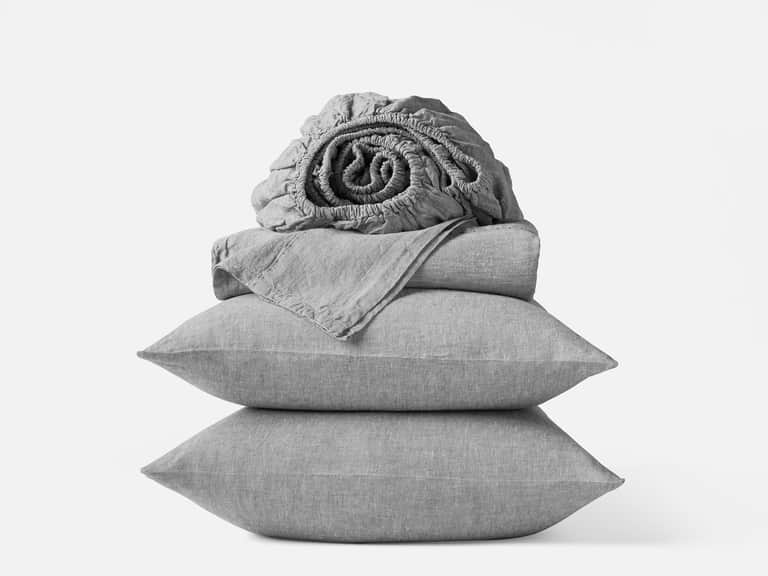
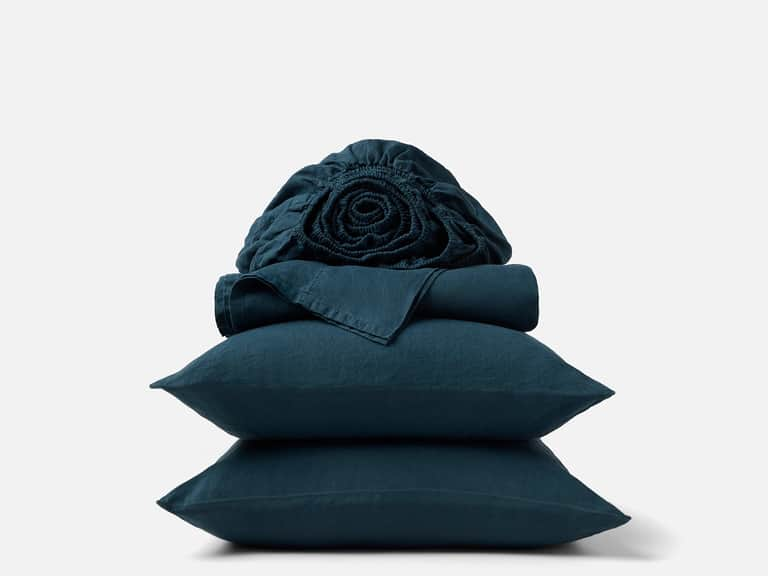
As one example, the Organic Relaxed Linen Sheet Set includes pillowcases and combines French-grown organic flax with linen woven in Portugal. Its relaxed texture and pick-stitched cuffs illustrate how material and finishing details can work together: the surface brings soft variation, while the stitched edge gives the pillow a clear, considered outline. Always check the set’s size details to confirm that its pillowcases suit your pillows.
Coordinate with sheets without making everything match
A bed can feel cohesive without using one fabric and color from top to bottom. Start with a visual anchor: perhaps the sheet color, a patterned duvet cover, or the natural tone of a linen layer. Pillowcases can echo that anchor through hue, texture, or a single finishing detail.
For a quiet, continuous look, choose pillowcases in the same color family as the sheets. Tonal combinations—warm white with natural flax, or a soft grey with a deeper charcoal—create depth without sharp contrast. If the bedding is already patterned, a solid pillowcase can give the eye a place to rest. If the sheets are plain, a contrasting cuff or a different but compatible texture can add definition.
Consider the scale of the room as well as the individual fabrics. A strong contrast at the pillow edge may become the bed’s most noticeable line. That can be useful in a spare interior, where a carefully chosen border adds structure. In a room with many patterns or decorative objects, a quieter case may keep the bed from feeling crowded.
Layering offers another way to create a tailored appearance. Arrange sleeping pillows in their pillowcases first, then add decorative shams or cushions in front. Keep the functional pillows easy to reach and use, rather than burying them beneath a complicated stack. The bed should look composed when made, but remain simple to settle into at night.
- For a calm, tonal bed: choose pillowcases close in color to the sheets and let differences in weave provide interest.
- For a crisp outline: use a contrasting cuff or a slightly darker case against pale sheets.
- For patterned bedding: repeat one color from the pattern in a solid pillowcase.
- For a relaxed look: combine natural texture with soft, related shades rather than pressing every layer into perfect uniformity.
Care helps preserve the fit and finish
Even a well-chosen case can lose its crisp edges if it is washed or dried carelessly. Follow the care label for the specific fabric, and avoid overloading the machine. Crowded laundry has less room to move and rinse, which can leave detergent behind or create uneven wear. Use an amount of detergent appropriate to the load and the product guidance; excess residue may affect the hand of the cloth.
Wash pillowcases with similar colors and compatible fabrics. Fasteners, hooks, or rough items in the same load can catch on the weave. Turn embroidered or delicately finished cases inside out when appropriate, and use a gentle cycle if the maker recommends it. A low-heat drying setting can help limit unnecessary stress, but always defer to the instructions for the particular textile.
Remove cases promptly when the cycle ends. This can reduce deep creases, especially in linen and cotton. Smooth the edges by hand before folding, paying attention to cuffs and closures. If you prefer a pressed finish, use the temperature recommended for the fabric. A deliberately relaxed surface does not need to be ironed flat; the aim is simply to keep the case comfortable, clean, and in good condition.
Rotating between several cases spreads wear across the set and ensures a fresh cover is available while another is being washed. Store clean cases completely dry in a cool, ventilated place. Folding them along their natural seams helps keep the cuffs tidy and makes it easier to pair them with their matching sheets.
A quick pillowcase fit check
Before making a bed, take a moment to check the relationship between the pillow and its case. The test is simple, and it does not require technical equipment—only a tape measure and a close look at the finished edges.
- Measure the pillow. Record its width and length while it rests naturally, and note its loft if it is unusually full.
- Read the case dimensions. Compare the measurements with the pillow rather than relying on the size name alone.
- Insert without forcing. Settle the pillow into the corners and check that the seams are not pulled taut.
- Secure the opening. Close or fold the case as designed; make sure the pillow is not likely to slide out.
- Inspect the surface. Smooth minor folds, but watch for persistent bunching or compression that suggests a poor size match.
- Check the finished edge. Align cuffs and closures consistently when arranging multiple pillows.
If the pillow is comfortable but the case is not, the solution may be as straightforward as choosing a different size or construction. A pillow that feels compressed may need more room; one that slips around may need a closer fit or a deeper closure. Small adjustments can change how the pillow feels beneath the head and how composed the bed appears.
A detail worth noticing
In a well-made bed, the eye often registers the whole before it notices any single piece: a calm field of fabric, a clean line at the edge, a pillow that holds its shape. Yet that impression is built from particulars. The pillowcase is fitted to its fill. The closure stays discreet. The cuff lies flat. The color belongs with the sheets, even when it is not an exact match.
These details are practical before they are decorative. A comfortable case does not pull against the pillow or gather beneath the face. A considered finish can make laundry and bed-making feel more straightforward, while a compatible fabric helps the different layers work together. The result need not be formal or immaculate. It may be crisp, softly rumpled, or richly textured; what matters is that the choices feel intentional and serve the way the bed is used.
Measure first, then consider closure, fabric, and finish. That sequence turns pillowcase shopping from a guess into a small exercise in observation—and makes the bed’s most familiar surface a little more comfortable, a little more orderly, and unmistakably its own.